LADATCO TOURS
HOME South America Central America Falkland Islands Explorer Tours Summer Skiing RIO
Carnival
RIO
New Year
Newsstand Air Only e-mail

Saunders view 1.jpg (51446 bytes) FALKLAND ISLANDS

Saunders Island


SAUNDERS ISLAND

Owned by David & Suzan Pole-Evans

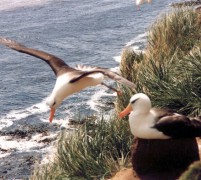
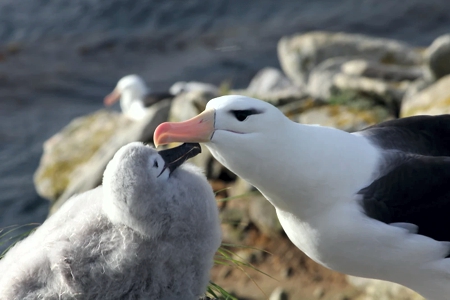
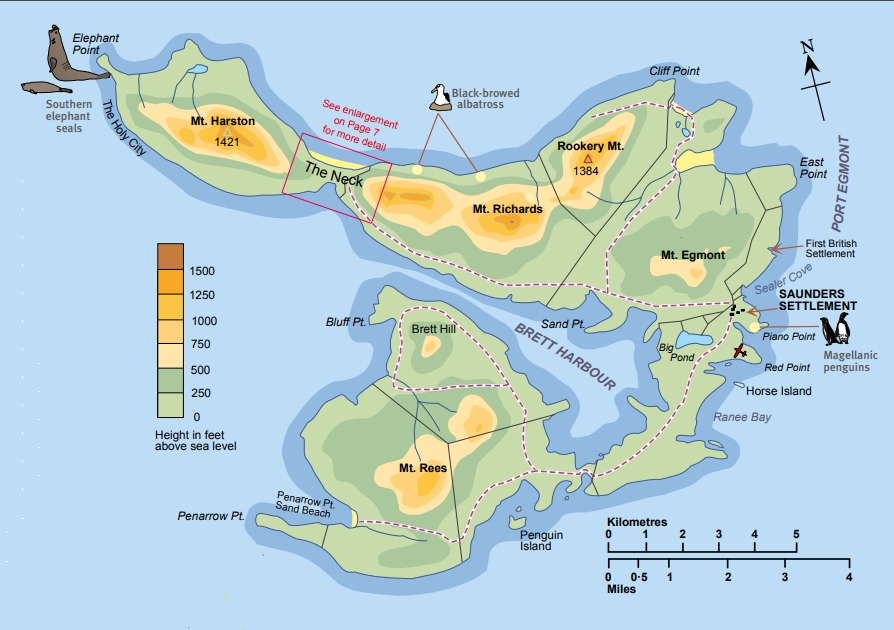
This 30,000 acre island, situated about three miles off the north west coast of West Falkland, about 90 miles from Stanley, is still an active sheep farm and is important historically for being the site of the first British settlement in 1765. However the attraction to the wildlife enthusiast is undoubtedly the Black-browed albatross colony which stretches along the north coast The Neck, so named because it is a narrow sandy isthmus between two high parts of the island.

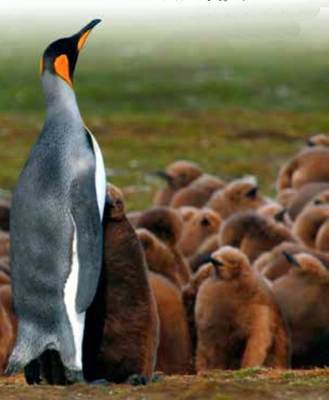
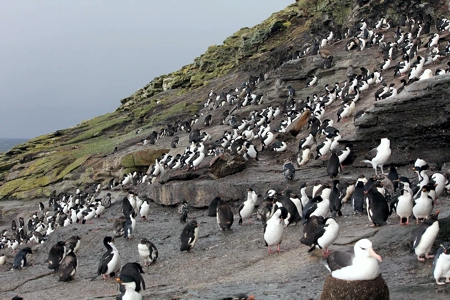
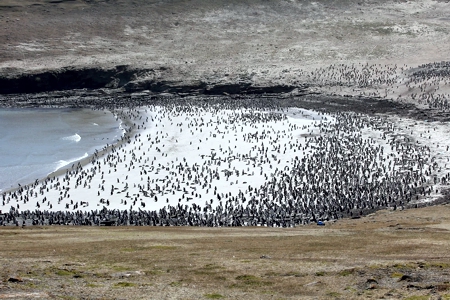
Saunders Island is a haven for wildlife lovers and photographers with gentoo, rockhopper, magellanic and rare sighting of macaroni and chinstrap penguins. Since 1980 a small breeding colony of king penguins has become established. Four species of raptors, black-browed albatross, king and rock cormorants, black-necked swans and many other shorebirds are easily accessible from the settlement or at the many and varied wildlife ‘hotspots’ around the island. The best months for wildlife are October to March, inclusive.

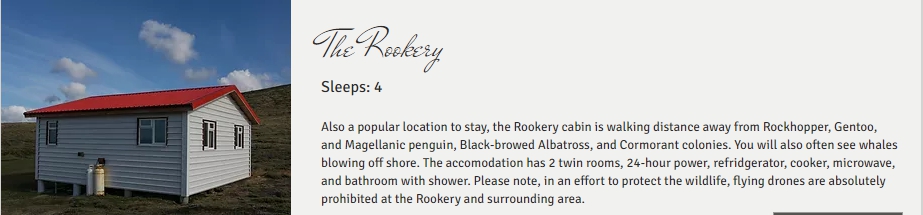
The Neck is one of the Falklands supreme wildlife sites. The northern beach is covered in stunning white sand pounded by majestic surf and is home to all of the penguin and bird species listed above. Nearby are a number of colonies of nesting black-browed albatross. On rare occasions Fin and Sei Whales have been seen off the island. In all cases amazing photo opportunities abound, and all of this only minutes walk away from the self-catering cabin at the Neck.

If you are not a wildlife enthusiast the scenery is a stunning vista of mountains and wide-open plains providing great hiking opportunities. The ruins of the Falklands first British base can be seen at Port Egmont, about a 30 minute walk along the coast from the present day settlement. A plaque marking the historical importance of the site, and the newly restored graves of the Royal Marines killed in battle at the end of the 1760’s during battle with the Spanish who took possession of Port Egmont briefly in the in the 1770’s can also be seen.

The southwestern part of the island is home to many pools and ponds (predominantly Big Pond) which harbour both silver and white-tufted grebes, and the occasional black-necked swan.

There is a small store in the settlement where a variety of frozen, dried and tinned provisions can be purchased. The farm can usually provide bread, milk, eggs and meat on request. All food purchases must be paid for in Falkland or Sterling pounds.

Saunders Island is the perfect place to escape from the pressures of urban life.

Accommodation in the Settlement: 
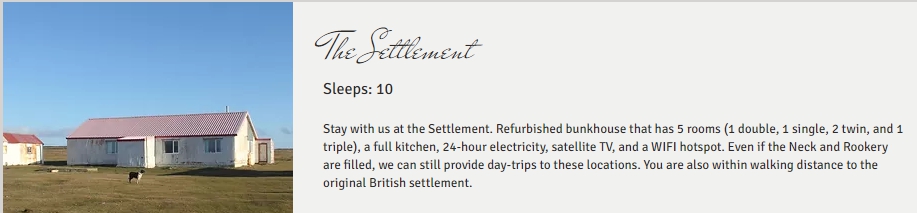
There are two self-catering cottages in Saunders settlement. The larger of the two, the Main House, can sleep up to 10 people in 2 twin, 1 single, 1 double and 1 triple room. It has a central heating throughout, shower room, bathroom and toilet. The kitchen is equipped with a gas cooker, fridge and all the crockery and utensils you will need for your self-catering stay. There is also a dining room, and a sitting room with radio and TV. Bedding, bed linen and towels are provided to visitors from overseas.

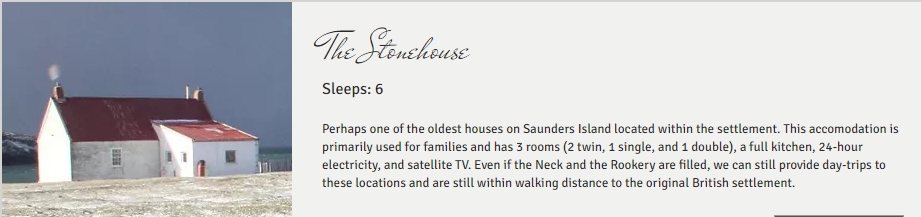
The second accommodation is called The Stone House and was built in 1875 but ahs been extensively modernized. It has kitchen, scullery, toilet, bathroom (with bath and shower) and 3 bedrooms sleeping 6 people (1 double and 2 twin rooms). The two upstairs bedrooms are centrally heated. The kitchen is well equipped with washing machine, fridge and a gas cooker and all crockery and utensils as well as TV and radio. Bedding, bed linen and towels are provided to visitors from overseas.

Accommodation at the Neck:
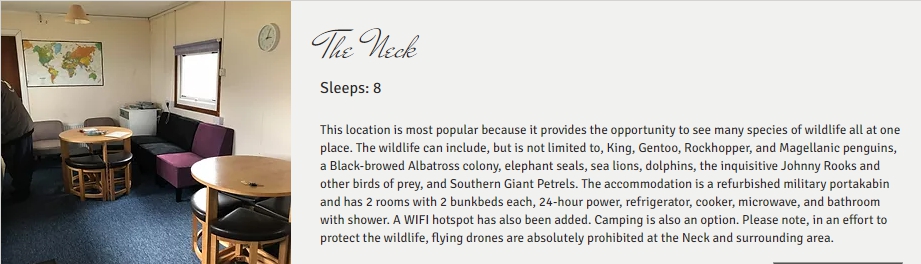
Although only 10 miles from the settlement it takes about an hour by Land Rover to reach the cabin at The Neck. The cabin can sleep up to 6 people, four in two sets of bunk beds in the bedroom, and another two in a curtained off area in the kitchen/living room. The living area is equipped with gas cooker, heater and a gas water heater. Lighting is provided by a solar panel so there are no electric sockets for recharging batteries etc. The bathroom has a bath and WC, but no shower. All bedding, bed linen and towels are provided to visitors from overseas. It should be noted that this accommodation is quite isolated, and you may not see anyone else from when you are dropped off until early morning on the day of your departure.

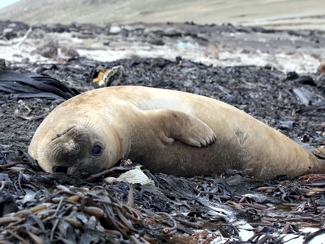
In addition to the abundant wildlife right on your doorstep, there are some enjoyable longer walks from the Neck for those with more time at their disposal. Elephant seals can usually be seen at Elephant Point which is the furthest point of the island from the settlement. Small pools just inland from elephant Point are home to a variety of wildfowl and the odd visiting specie from the South American mainland. Care should be taken when walking as there are many magellanic penguin and rabbit burrows in the area.

Mount Hartson (the highest point on the island at 436 m), west of the Neck, provides great views across to Carcass and West Point Islands, and even to the Jason Islands on a very clear day.