LADATCO TOURS
HOME South America Central America Falkland Islands Explorer Tours Summer Skiing RIO
Carnival
RIO
New Year
Newsstand Air Only e-mail


The Inka Trail

Inca Trail Route Map
Inca Trail Altitude Map
Chicago Tribune Article by John Biemer Jan 2005
Sample 4-day/3-night itinerary

PER-IncaTrail-river.jpg (8194 bytes)

PER-IncaTrail-path2-s.jpg (29343 bytes)


PER-IncaTrail-vu-s.jpg (22627 bytes) PER-IncaTrail-path-s.jpg (28159 bytes) PER-IncaTrail-steps-sjpg.jpg (40105 bytes)

ABOUT THE INCA TRAIL:
The Inca trail is, without a doubt, one of the great treks in the world. But even if you have trekked often and in other challenging situations, bear in mind the sustained altitude of this trek - an average of 8,000 feet with two high passes: Warmiwanusqa (Dead Woman) at 4,200 m (12,600 ft) and one at 3,850 m (11,550 ft).

The "trail" ranges from Inca stone highways to Inca stone steps and as one trekker who completed the walk declared: this should be called the Inca Steps, not the Inca Trail.

But if you can take the rigors of the up and down, the high passes, the hot suns and cool to cold nights the rustic camping conditions, you will be aptly rewarded.

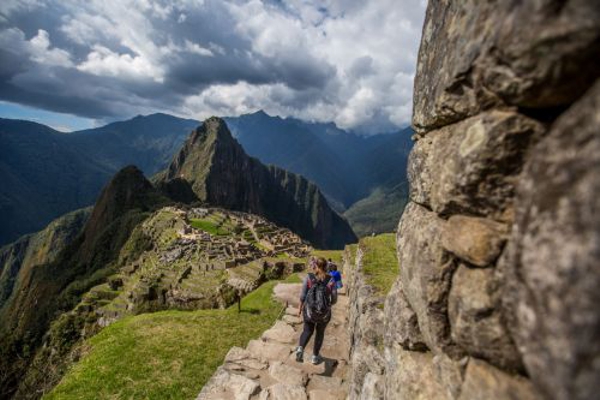
You will encounter scattered Inca ruins, rivers, fast flowing streams, lush meadows, forests with tall trees and giant ferns, cloud forests, foaming waterfalls, terraces and spectacular vistas of snow capped mountains all along the way - Punasillo (6,245 m), the Vilcabamba range and Salcantay (6,270 m) to name a few.

The "trail" begins at Km 88 and ends at the Intipunka (Sun gate) with the most magnificent of all panoramas of the famed Lost City, Machu Picchu.

Along the way your Indian porters carry all your gear except your day pack, leaving you unburdened to hike at your own pace. All gear except personal gear and sleeping bag (can be rented) are provided and all the camp and cooking responsibilities are taken care of by your trek staff.

Fortunately access to the trail is now controlled and all hikers must be part of one of the programs offered by outfitters. Allow a few days prior to departure for acclimatization. Departures are  from Cuzco by train to Km 88 and most normally you spend 3 nights camping on the trail and the 4th morning arrive at Machu Picchu. You have the day to explore and you can amp down below along the shores of the Rio Urubamba for the night, or stay at one of the hotels at Machu Picchu or Aguas Calientes, and return to Cuzco on the afternoon train on Day 5.

Be sure to bring along with you in your personal gear rain poncho, sun glasses and plenty of sun protection, insect repellent, flashlight with extra batteries and of course plenty of film. Plan to layer clothes; long pants and long sleeves provide additional sun protection and additional warmth when needed. Good trekking boots are a must.