

Destinations
Experiences
|
L A
D A T C O T O U R
S |
|
||||||||
| HOME | South America | Falkland Islands | Antarctica | Unique Destinations |
Unique Experiences |
Newsstand | ||||
|
Hacienda Zuleta Ecuador |
|
 |
 |
 |
 |
ABOUT ACTIVITIES AT HACIENDA ZULETA - in their own words:
Miles of meandering roads through lush pastureland, pine trees and a eucalyptus forest make the valley of Zuleta a paradise for outdoor activities, such as hiking and trekking. There are horses, mountain bikes and a horse drawn carriage, which allow guests to explore the area. At the hacienda guests can find out more information about trails in our activity room; there are options for every interest and fitness level.
|
ACTIVITIES AVAILABLE INCLUDE - click here for complete details |
||
|
|
|
HORSEBACK RIDING
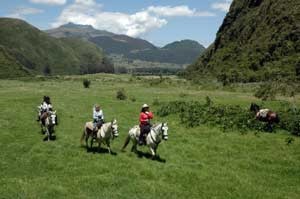
Horseback riding in Ecuador has been a Plaza family tradition for over one hundred years, and today Zuleta reflects this equestrian affinity by boasting one of the most exclusive stables and horse riding experiences in Ecuador. Zuleta is also known for its Zuleteño horse, a unique mixture of Spanish – Andalusian, English and Quarter horses. The outcome of this crossbreeding is a robust, noble and smooth Andean horse with a perfect disposition for trail riding.
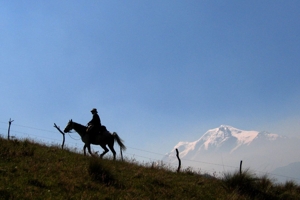
Many of our guests come to Zuleta specifically for one of our 3 to 10 day riding programs. Riders will have numerous opportunities to explore the Andean countryside along high altitude trails (between 9,000 and 11,000 feet) that wind through “páramo”, making the experience an authentic South American horseback ridding adventure.
ARCHAEOLOGY
Archaeological tours of the Caranqui Pyramids take you back in time to when the Zuleta valley was populated by ancient civilizations.
Pre-Incan and Incan Period :The original inhabitants of the Zuleta region were the peace-loving Caranquis. They were an agrarian-based culture and flourished in this area rich in volcanic soils from about 800 A.D. until the arrival of the war-faring Incas in the late 1470's. Although the Caranquis fought stoically against the Inca for forty years, they were eventually conquered and forced into Inca servitude. Yet Inca rule was short-lived. By 1534, the last Inca king, Atahualpa, had been captured and assassinated by the Spanish conquistador, Pizarro, leaving the Inca empire in collapse and a free for all for the land-hungry vassals of the Spanish Crown.THE COMMUNITY EMBROIDERY PROJECT - click here for complete details
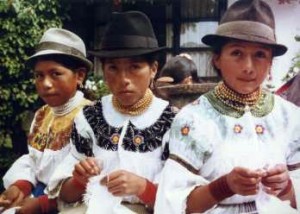
Pre-Colombian Andean cultures boast a long tradition of weaving abilities, far surpassing those of Europe in the same era. The most talented weavers could produce material with as many as five hundred two-ply woolen wefts per inch. The highest figure attained in Europe before the industrial revolution was a mere one hundred.
Originally, traditional resources were used such as cotton and llama and alpaca wool to create complicated brocades, tapestries, double cloth and gauze. However, with the arrival of Spanish in the mid 1500's, new resources were introduced, such as silk embroidery yarns. The Zuleteña women quickly incorporated these yarns into their weavings, and centuries later they are now renouned for their hand embroidery expertise, unique designs and colors.CONDOR HUASI REHABILITATION PROJECT - click here for complete details
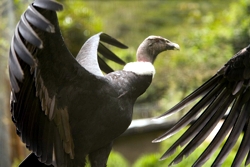
The CONDOR HUASI project has been created to accomplish the conditional reintroduction of captive condors to the wild. It also includes an educational objective of ‘páramo’ (high-altitude grasslands) conservation for the communities living in the area.
CONDOR HUASI is located in ‘La Rinconada of San Pedro’, in the property of Hacienda Zuleta, in the community of ‘La Rinconada’, parish of Angochagua, county of Ibarra, province of Imbabura, Ecuador, South America.
The initiative for this project was taken by Dr. Friedman Koster, zoologist and condor expert, and Heide Koster, biologist, with the support of the Galo Plaza Lasso Foundation. The planning, management and performance of the project are now under the supervision of the Foundation, with the technical support of Dr.Friedman and Heide Koster. CONDOR HUASI`s main objective is environmental education, which attempts to raise the level of consciousness of the children and the general population in the area on the importance of the conservation of wildlife and natural resources, with a focus on the conservation of ‘páramos’.
BIRD WATCHING
Zuleta offers a unique experience for bird watching in Ecuador. Begin your day with a breakfast surrounded by humming birds followed by an excursion to the Andean condor rehabilitation area. The knowledgeable guides will accompany guests through unique bird watching tours by foot, bike, horse or truck, while our staff makes sure that your stay is completed with first class Andean hospitality.FESTIVAL OF SAN JUAN
Every year on June 23rd there is a celebration for Saint John the Baptist with a grand party called the festival of San Juan. At nightfall people go from house to house, dancing, singing and playing instruments like the guitar. Those families that have a picture or painting of San Juan decorate a “castillo” (a wooden frame that hangs on the wall) where they tie food like bread, bananas, pineapples, oranges as well as liquor and money. They also prepare the traditional “kaspashca” which is made of corn and beans that the region has in abundance during this time of the year.