

Destinations
Experiences
|
L A
D A T C O T O U R
S |
|
||||||||
| HOME | South America | Falkland Islands | Antarctica | Unique Destinations |
Unique Experiences |
Newsstand | ||||
|
Villa de Leyva
|
|
||
ABOUT VILLA DE LEYVA - COMPLIMENTS OF PROEXPORT COLOMBIA:
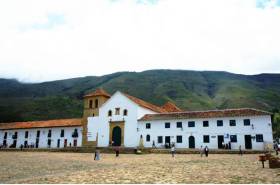
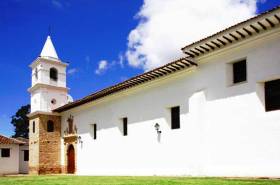
If it were not for the cold climate, upon arriving at Villa de Leyva, you would think that you are in the heart of Andalucía. The impression is very similar. White façades, wooden windows and doors, and lovely balconies with a Moorish influence are the characteristic accents of the Hispanic tradition of the town.
Villa de Leyva was founded in 1572 and built according to Spanish architectural norms. Even the location of the city – in a valley – seems to be an emotional encounter of the New World with sites in Spain. A long history of Mediterranean cities helped the conquistadors establish the central plaza and the network of streets. However, the heart of the city undoubtedly belongs to the department of Boyacá. This is where the grace and the character of Villa de Leyva lie.
The 14,000 square meter plaza is immense. During the time of the Spanish Reconquest, several gallows were erected for executing freedom fighters. At present, the plaza is the core of festivals and celebrations, such as the Kite Festival in August, the exhibit of high-performance motorcycles, the onion beauty pageant in October, the Festival of the Lights in December, and even the astronomical festival in honor of the town’s strategic location.
Arriving at Villa de Leyva, donning a cap and a woolen ruana, and drinking a cup of hot chocolate and cheese in one of the cafeterias on the main square is like taking a step into the past. A stroll of its cobblestone streets, admiring the central patios of old houses and stopping for a moment to take a deep breath while looking at the mountain that once hid the town´s main church will also take visitors back to remote times. This authentic colonial town will leave unforgettable impressions, where religion, architecture, green landscapes, and the passion of the boyacenses are singularly blended.
WHAT TO DO IN VILLA DE LEYVA
Interesting sites within the town:
- The main plaza is the center of the town: Cobble-stoned, and with an area of 14,000 m², it is considered the largest plaza in Colombia. The parish church built in the first half of the 17th century faces the plaza.
- Casa del Cabildo: the town Council House is located on the southern side of the main plaza and is one of Villa de Leyva’s historical relics.
- Casa de Nariño: the house where independence precursor Antonio Nariño died on December 13, 1823
- House where the first distillery in the New Kingdom of Granada operated: known as “La Real Fábrica de Licores”
- House of poet and playwright Luis Vargas Tejada: author of “Las Convulsiones” (The Convulsions), located one block north of the old distillery.
- Birth house of Antonio Ricaurte: hero of the Colombian Independence, who died in San Mateo. The Colombian Air Force bought the house in 1970 and established a military museum as homage of admiration and affection to its patron.
- San Agustín: Also on the Ricaurte Plaza, this is the building where the convent by the same name, founded in 1850, used to operate.
- San Francisco: a Franciscan convent founded in 1614 and abandoned by its residents in 1821.
- Convent of the Discalced Carmelites: founded on April 8, 1645. Since then, the cloistered nuns have dedicated themselves entirely to prayer and manual work.
- Church of Our Lady of Carmen: built in 1850, it is a cross between two authentically Andalusian chapels. The first is primitive and was dedicated to Our Lady of Carmen; the larger one is known as the “Iglesia de Mamá Linda” (church of the beautiful mother).
- House of General Gustavo Rojas Pinilla: the house once inhabited by ex-President and General Rojas is located on the southeastern corner of the Plazuela del Carmen..
- Paleontological Museum: On the road to Arcabuco is the oldest wheat mill in Colombia. Today it is a museum that exhibits 120 million year old fossils.
Interesting sites in the surroundings of Villa de Leyva
- El fósil: an impressive Kronosaurus queenslandicus 120 million year old fossil is on exhibition in this museum. 5 ½ km on the road to Santa Sofía.
- El infiernito: site of the astronomical observatory of the Muiscas, where fragments of the observatory and phallic monoliths – symbols of fertility – are found. 8 ½ km on the road to Santa Sofía.
- Cueva de la fábrica: a natural cave formed by an underground river and an ideal site for caving. 20 km on the road to Santa Sofía.
- La Periquera Waterfalls: The main fall is 15 meters tall. Other equally marvelous waterfalls may be visited by following the course of the river. 14 km on the road to Gachantiva.
- Pozo de la vieja: This site – a beautiful pond – has its own legend. 6 km on the road to Gachantiva.
- Iguaque Lake: The tour to Iguaque Lake, located at 3,800 meters above sea level, begins just a half-hour drive from Villa de Leyva. History tells us that the Muisca civilization originated here. It is a beautiful, spiritual place, well worth visiting.
- Desert of Villa de Leyva: When entering Villa de Leyva, it is possible to see the desert to the left. Cross-country motorcycling and mountain biking take place there, and it is also fairly easy to find fossils..
- Ráquira: This village, where artisans produce ceramics and weavings, is located on the road to the town of Chiquinquirá.
- The ostrich farm: Learn about the industrial production of ostriches and taste their healthy meat. 4 km on the road to El Fósil, in the jurisdiction of Sopota.
And there are other activities to enjoy in Villa de Leyva:
- Ecological walks
- Bycicle rides
- Horseback rides
- Caving
- Rappelling
- Canyoning
Many culture-related activities are possible, museums, handicrafts shops, and artists’ workshops, as well as the enjoyment of a variety of restaurants. Villa de Leyva is the ideal colonial town for spending vacations.