

Destinations
Experiences
|
L A
D A T C O T O U R
S |
|
||||||||
| HOME | South America | Falkland Islands | Antarctica | Unique Destinations |
Unique Experiences |
Newsstand | ||||
 |
Olinda Brasil
|
 |
 |
 |
 |
 |
|
ABOUT OLINDA - in the
words of Pousada dos Quatro Cantos: On the
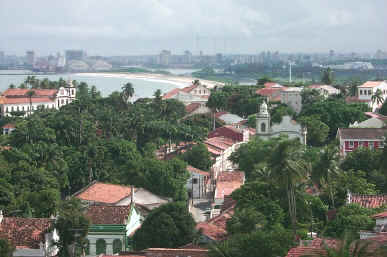
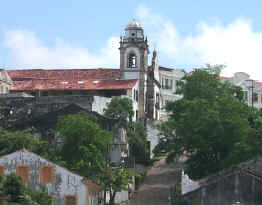
northern coast of Pernambuco state, Olinda is located at the top of a hill, 6 km from
Recife - the state's capital - and 12 km from Guararapes International Airport. |
Gastronomy:
Considered by many to be the third best cuisine in Brazil, the food of Pernambuco is the refined result of many cultures and races mixing together over the centuries to produce something truly unique. From the Indians we learned how to use corn and the root vegetables; from the Portuguese, how to prepare fishes, meat, and vegetables, and from Africa, we inherited exotic spices and seasonings. You will always find the table filled with incredible flavors made with roots like macaxeira, inhame, and sweet potatoes, as well as cooked fruits such as banana comprida and fruta-pão.Since we are located on the coast, you will find that dishes based in a variety of seafood truly show the best of the what the region has to offer. Imagine coconut lobster or prawn with exotic sauces, Guaimunzada, fish simmered in coconut cream, steamed crab, seasoned octopus, and all manner of creative dishes composed of "Fruits of the Sea."Popular Culture:
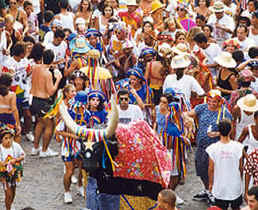
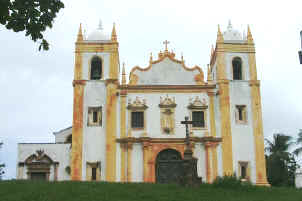
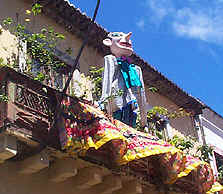
In a country identified by religious, celebratory, and popular art, Olinda stands out for the unparalled richness of its cultural expression. The people, intensely attached to the land, keep alive not only the stunning architectural traditions and religious rituals, but also the world-famous carnaval and distinctive handicrafts that the city has always been known for. The early Catholicism is represented in countless churches, chapels, and "passos," but Olinda is alive with other influences as well, including native American and African, key components of the city (and Brazil's) make-up today. This ethnic diversity offers the perfect cultural mix that makes Olinda an eternal city, apart from time and existing in a space of its own. It is a place where you can find exquisite art, sculpture, and painting, as well as an amazing variety of musical rhythms, such as frevo, maracatu, pastoril, forró, ciranda, xaxado, bumba-meu-boi, caboclinhos, capoeira, and many others.