|
|||||||||||||||||||||||
|
|
|
|
|
ABOUT POUSADA ETNIA - in their own words:
GETTING TO TRANCOSO:
After arriving in Porto Seguro, there are two ways to arrive at Pousada Etnia.
Option 1: Crossing by ferry Porto Seguro / Arrial d´ Ajuda + 40 km of asphalt road.
Option 2: Follow the road BR 367 until the intersection of BA 001 + 60 km until Trancoso. The Pousada Etnia is located in the town center.LOCATION:
Located in Trancoso downtown. 5 minutes to "Quadrado", the heart of the village and 15 minutes to the beach.
ACCOMMODATIONS:
There are only 8 bungalows, each with a theme.
Each includes:
- Air conditioning
- Cable TV
- Hairdryer
- In-room internet
- In-room Safe
- Mini bar
- Safe-guard
- Telephone
Bathrooms come with large walk-in showers and small indoor gardens.
Five Deluxe Bungalows:
- Tribal: African-inspired art
- Goa: India inspired
- Kyoto: Japanese style
- Trancoso: colorful paintings of the village
- Cottage: light, white
Three Master Suites, offering a bit more space:
- Marrocos
- Gypsy:
- Mediterranean
Facilities:
- Bar
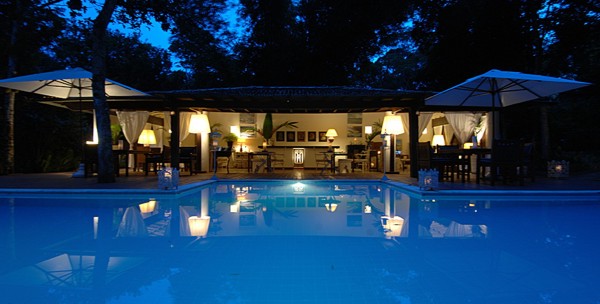
- Swimming pool
- Restaurant
- Garden with 7000m2
- The hotel has a store in the 'Quadrado' that sells famous trades
- Business: Fax Machine - Personal computer
Services:
- Agreements of green fee with Terra Vista Golf Course
- Laundry Service
- Water Therapy:
The origins of WATSUŽ are based on Zen Shiatsu. Massage, stretching and applied pressureon specific energy points helps to restore the body's energy balance. WATSUŽ is a deep body threatment with many therapeutic benefits/results.- Massages and Therapies of your choice.
- Relaxing massage
- Shiatsu
- Reiki
- Reflexology
- Lymphatic Drain
- Ayurvedic Massage
- Lymphatic Drain with reflexology
Trancoso, a small village on the Southern coast of Bahia, Brazil was rediscovered by the hippies in the late seventies. Back then, the village was simply a row of humble fishermen shacks lining the square with a church at the far end overlooking the sea. Today, the famous grassy square is better known as the Quadrado. The town plan, modeled on the first Indigenous Indian villages, was created by the Portuguese Jesuits who inhabited Trancoso during the years that succeeded the discovering of Brazil. This model of urbanization respected local customs that were originally part of the Indian culture long before the Jesuits arrived- marriage was only granted between two members whom lived on opposite sides of the lawn/square. Due to its stunning nature and wonderful beaches, Trancoso attracts people from the world over. Architects, craftsmen, artists and designers have found the inspiration here to develop, together with local artists and craftsmen, their own style, currently recognized and respected in Brazil and abroad.