

|
|||||||||||||||||||||||
|
Faro
Punta Delgada |
|
![]() |
![]() |
![]() |
![]() |
|
ABOUT FARO
PUNTA DELGADA - in their own words: At the end of the earth, where lonely moors stretch as far as the eye can see, a different outstanding beauty captivates you. Patagonia beats on the Peninsula, where new sensations feed your eyes and souL. The Valdés Peninsula is considered a World Heritage.
|
|
|
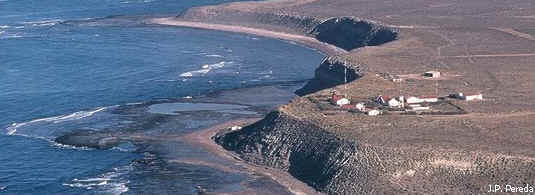
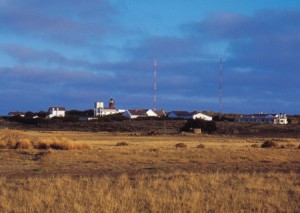
PUNTA DELGADA LIGHTHOUSE: In a magically clear atmosphere stands an alert lighthouse. Located at a strategic spot, it protects vessels from sandbars. These sandbars form a wide dark green stone coast that, when covered by tides, becomes extremely dangerous for sailors navigating the untamed South Atlantic Ocean. The lighthouse has life of its own and the spirit of pioneers of the Argentine Army remains inside, the spirit of those who first drifted along these lands filled with passion and adventure. At night, the lighthouse is the star. Its light beam goes through the mist giving a glimpse of magic and guiding vessels in the dark since 1905.
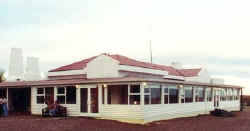
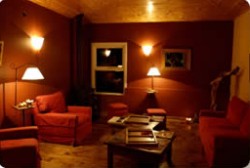
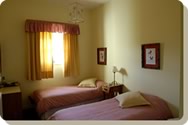
PUNTA DELGADA HOTEL: Originally, the place was Correo Argentinos main office and the Argentine Navys casino. Today, it is an exclusive romantic hotel, where you can enjoy all the comfort in a naturally wild environment. The hotel boasts 27 warmly decorated rooms, a pub, a restaurant and a boutique.
From the moment you wake up until you go to bed, the hotel plays an undisputed role on a holiday in which absolutely everything is connected to pleasure and nature harmony.
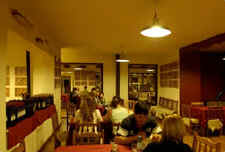
THE RESTAURANT.
With its tones of ochre and white, creating an intimate and cosy atmosphere, the all-wood restaurant offers meals along with an efficiently discrete service, home-made dishes and exquisite flavours to indulge all palates. The restaurants main dish is Patagonic lamb served with various accompaniments captivating restaurant guests with the typical Argentine flavour. For wine lovers, a good variety of white and red wines cheers their hearts and warms their souls. The restaurant also delights guests with other exquisite delicacies - some original, some traditional, but all home-madeThe LIGHTHOUSE pub. It is a special place to share the days experiences and program the activities of the following day. It offers a cosy and modest atmosphere where you can find several pieces of our history, such as different elements of the National Navy, objects of the Peninsulas country life, and piles of Puerto Madryns antique port spanning over one hundred years of history. Also you can play pool, cards, darts as well as various table games.
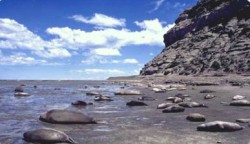
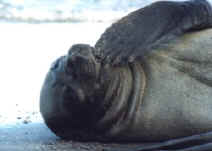
THE COAST. On the beach, the sea moistens the environment and the sound travels in the air. Energetic tides piling up against the coast to form cliffs and caves blend into the magnificent scenery. The beach houses a colony of elephant seals. Valdés Peninsula is the only continental post of elephant seals in the world. Characterised by its large size, the males trunk, and the females deep and tender look, this magnificent species makes the land a passionate place.
ACTIVITIES: The hotel offers a wide variety of activities so that you can fully enjoy your stay in the Peninsula, connect with nature and marvel at the Patagonic views.
Interpretative walks along the coast with specialised guides to observe elephant seals. You walk along paths that enable you to see the animals, bearing in mind how important it is not to disturb them. On the beach you can sit to observe this magnificent species, accompanied by the murmur of the sea and the dark green of the sandbars.
4x4 rides to visit the most stunning views of the Peninsula and go wildlife watching to places where numerous silent inhabitants are a pleasure to look at.
- HORSE RIDING. Horse riding along the cliffs sets your pulse running, plunges you into an earth and sea journey, making you feel you are an active participant in preserving the environment. From the cliffs, you can see two completely different landscapes where life takes many forms. You can also hear the wind blow inwardly, see the birds flying passionately, feel the earth vibrating roughly as night begins to fall, while you desperately try to keep those brief moments that will soon begin to disappear.
- Panoramic trekking.
- Guided visits to the lighthouse.
Estancia San Lorenzo is home to a colony of over 120,000 Magellanic penguins. On the way to the farm, you travel all along the coast of the Peninsula, visit the Caleta Valdés Natural Reserve as well as Punta Norte (Sea Lion Natural Reserve and an excellent place to go killer whale and whale watching. You can also visit important fossil deposits.
Whale watching in Puerto Pirámides from the coast or boating excursions including whale watching.
Scuba-diving in Puerto Pirámides..
MARINE WILDLIFE:
SOUTHERN RIGHT WHALE. These mammals are part of the cetacean family. They may have a life expectancy of over 60 years. They measure up to 16 meters long and weigh up to 50 tons. Females are slightly bigger than males. every year, they arrive to Valdés Peninsula in June and stay until December. They come to mate, give birth and breed calves. This species can give birth every 2 or 3 years. Once the 1-year gestation and 1-year lactation periods finish, fertile females are ready to mate again. It is believed that some 50 calves are born per year in Valdés. As the nursing milk contains a lot of fat, calves weight increases very fast. Thanks to the callosities found on top and side of their head, they can be followed for long periods. As each pattern of callosities is different for each whale, animals visiting the Peninsula every year can be easily photo-identified. Their wide short pectoral flippers are another distinctive feature, though they have no dorsal fin. Females give birth for the first time whey they are 7 or 9 years old. The new-born is 5.5 meters long. Due to their proximity to shore, slow movement, and high fat content, they were the first to be commercially exploited as well as highly pursued by whalers. After mating they migrate long distances to places where they can find a good number of plankton-copepods and Krill.SOUTHERN ELEPHANT SEALS. Males can reach 5 meters in length and weigh 3,500 kg while females can reach 3 meters in length and weigh 900 kg. Elephant seals are the largest of all seals. They use their trunks to fight for females. Every year, they arrive to the Valdés Peninsula in two different occasions. In spring, they come to mate and give birth and, in summer, they return to moult their skin. They are extremely polygynous. Males compete for females and subordinate them to form harems. They give birth to one pup per year after being pregnant for over 11 months. The mothers nurse their pups for less than a month. While on the coast, they do not eat, and rest most of the time, so as to save energy and be able to return to the feeding area without any problem. They feed on squid, but their diet also includes fish. They migrate 400 km heading to the continental slope to forage for food.They are amazing divers. They can stay at depths of 1,200 meters for over 100 minutes. As they dive, they exhale the air from their lungs. The bloodstream carries oxygen through the haemoglobin and the muscles carry oxygen through the mioglobin
MAGELLAN PENGUINS. Magellan Penguins are the only birds that can swim, but not fly. They are around 45 cm long. They are amphibious that need to come on land to incubate their eggs, care for the young and moult and grow their adult feathers. They are naturally loyal and every year they return to their colony searching for the same nest and the same partner. Males are the first to arrive by the end of August or beginning of September. They spend a lot of time digging and preparing their burrows. At this stage, they often fight over territory. They dig burrows into sandy grounds or under bushes creating penguin colonies with several hundred thousand nests. In October, females lay, generally, two eggs. The parents share in the responsibility of caring for the eggs and the young during forty days. In November, the first young penguins are born. As baby chicks are constantly hungry, parents are always getting into the sea to forage for food. The baby penguins depend absolutely on their parent during the first two months. Eventually, they moult and grow their adult feathers heading for the high seas by themselves. As parents lose a lot of weight, they leave their colonies to forage for food, and then return to begin their annual moulting. During the moulting process, they do not go into the sea. Between the end of March and the middle of April, they finish these processes and are ready to migrate towards Brazil following anchovies and leaving deserts, nest, and beaches behind.
STEPPE FAUNA:
GUANACO: Patagonic guanacos are part of the camelidae family. They have a wonderful reddish fur made of very fine wool. They are herbivorous mammals and live in arid and semiarid areas. Adults are nearly 1.60 meters tall and their weight can range between 80 and 120 kg, and baby guanacos weigh between 8 and 15 kg. The mating period goes from October to February and, after being pregnant for 11 months, females give birth to a single calf once a year. They nurse their calves for six to ten months. Females become sexually mature when they are two to three years old, while males become sexually mature one year later. They have a life expectancy of 15 / 16 years. While the herb is feeding, the dominant male warns its herd with an alarm call in case of any danger. They are territorial. Males compete to keep a territory with natural resources in order to attract females. A good territory offers food, water and protection from predators. For Precolombian indigenous cultures, subsistence was based on the hunt of guanacos. Tehuelches used guanaco furs to produce blankets (quillangos), coats, and simple moccasins. They also used their tendons to produce threads and their bones to build various musical instruments.LESSER RHEA: (ñandú petizo, choique). The lesser rhea (ñandú petizo, choique) is smaller than the Pampeano rhea. They inhabit the steppe in the south of Mendoza, Neuquén and Chubut. Although they are flightless birds, they can reach 60 km per hour protecting them from other animals. They are omnivore and feed on insects, small rodents, grass and green shoots. They form groups but, in case of danger, they spread out in an attempt to confuse the predator. Several females lay their eggs in the same nest, sometimes, even more than 30. It is surprising to see that males are the ones who incubate the eggs and care for the young until they can live on their own. Foxes are the main egg and chick predators. Like guanacos, they were the first to inhabit Patagonia. They were part of Tehuelches diet.
MARA: They are natives of arid grasslands of Patagonia. They are rodents and feed exclusively on vegetation. Although exceedingly shy, they have enhanced senses that help them notice predators at a distance. Pumas, foxes, wild cats, raptors are the main predators attacking their young. They are also called Patagonian hare due to their high travel speed. These rodents have very unusual behaviour, especially for mammals. They are monogamous and the adult pairs intermittently nurse their young using a community system. They live into burrows in groups of 4 to 8.
GREY FOX: Grey foxes live in the Patagonic steppe, especially in bush-like areas where they can blend into the landscape. They are cunning and patient hunters and they often hunt at night. They feed on insects, rodents, birds and sheep. Their tail is about 35 cm. They are 90 cm long. They live in Argentine Patagonia and in the South of Chile.